Reconstructing the Facial Nerve After Trauma
Repairing the main nerve trunk following a gunshot wound.
At a Glance
The Challenge
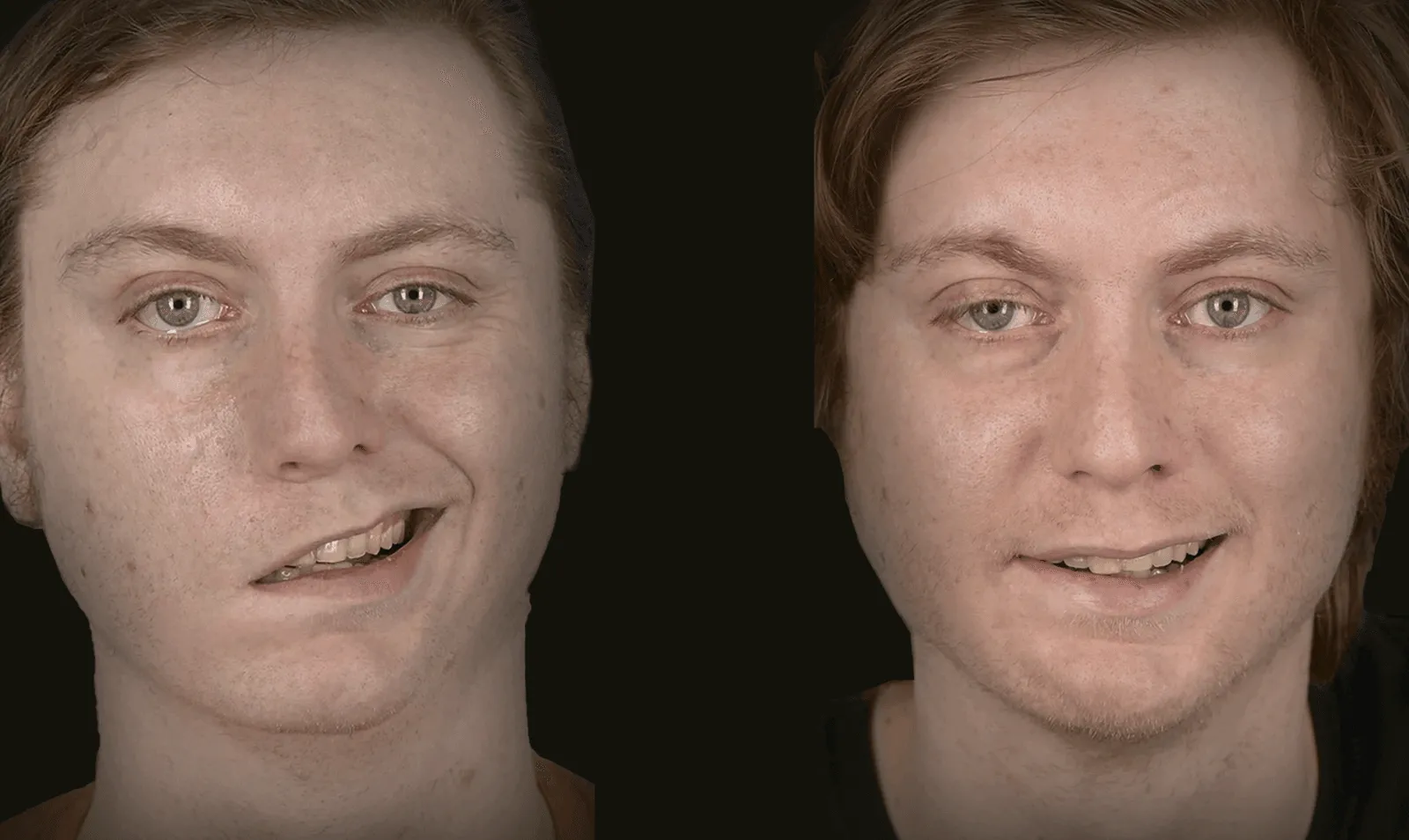
A gunshot wound to the face caused devastating damage, severing the main trunk of the facial nerve before it branches out to the face. This resulted in total paralysis of one side of the face, affecting the forehead, eye, cheek, and mouth.
The Solution
Dr. Jowett performed a complex repair of the facial nerve's main trunk. Because a section of the nerve was missing due to the injury, he used a nerve graft (a "bridge" of healthy nerve tissue) to reconnect the severed ends. This allows the electrical signals from the brain to once again reach the facial muscles.
Technical Insight
Procedure: Interposition nerve graft to the main trunk of the facial nerve.
Surgical Note: Repair of the main facial nerve trunk is technically demanding but offers the potential to reinnervate all downstream branches. An interposition graft (such as the great auricular nerve) was used to bridge the gap created by the ballistic injury. Successful regeneration at this proximal level can restore tone and synchronous movement to the entire hemiface.
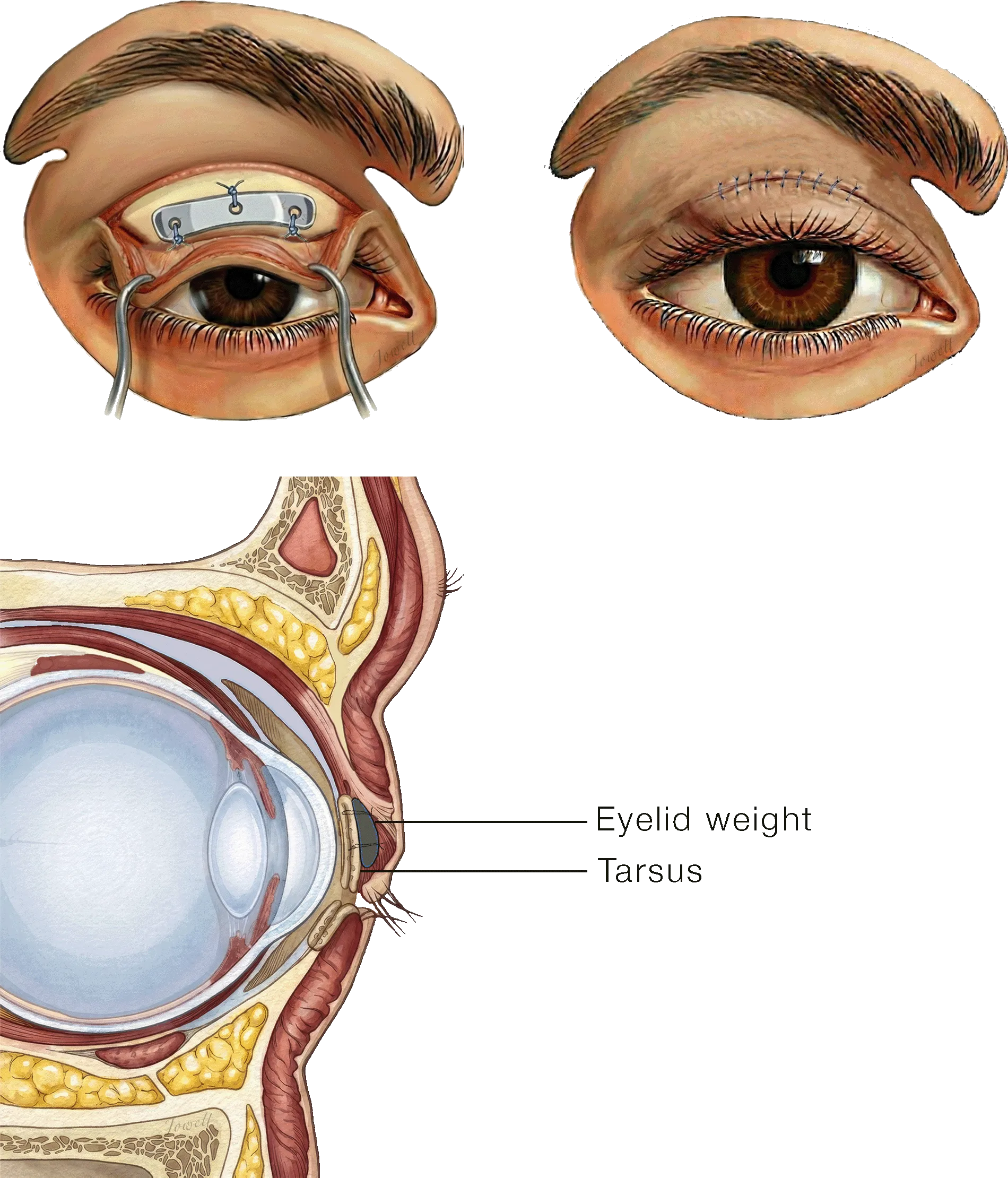
Upper Eyelid Weighting in Facial Paralysis
Through a discreet incision in the upper eyelid crease, a thin platinum weight is inserted to assist with eyelid closure. The weight is placed under the skin and muscle just above the eye-lashes.
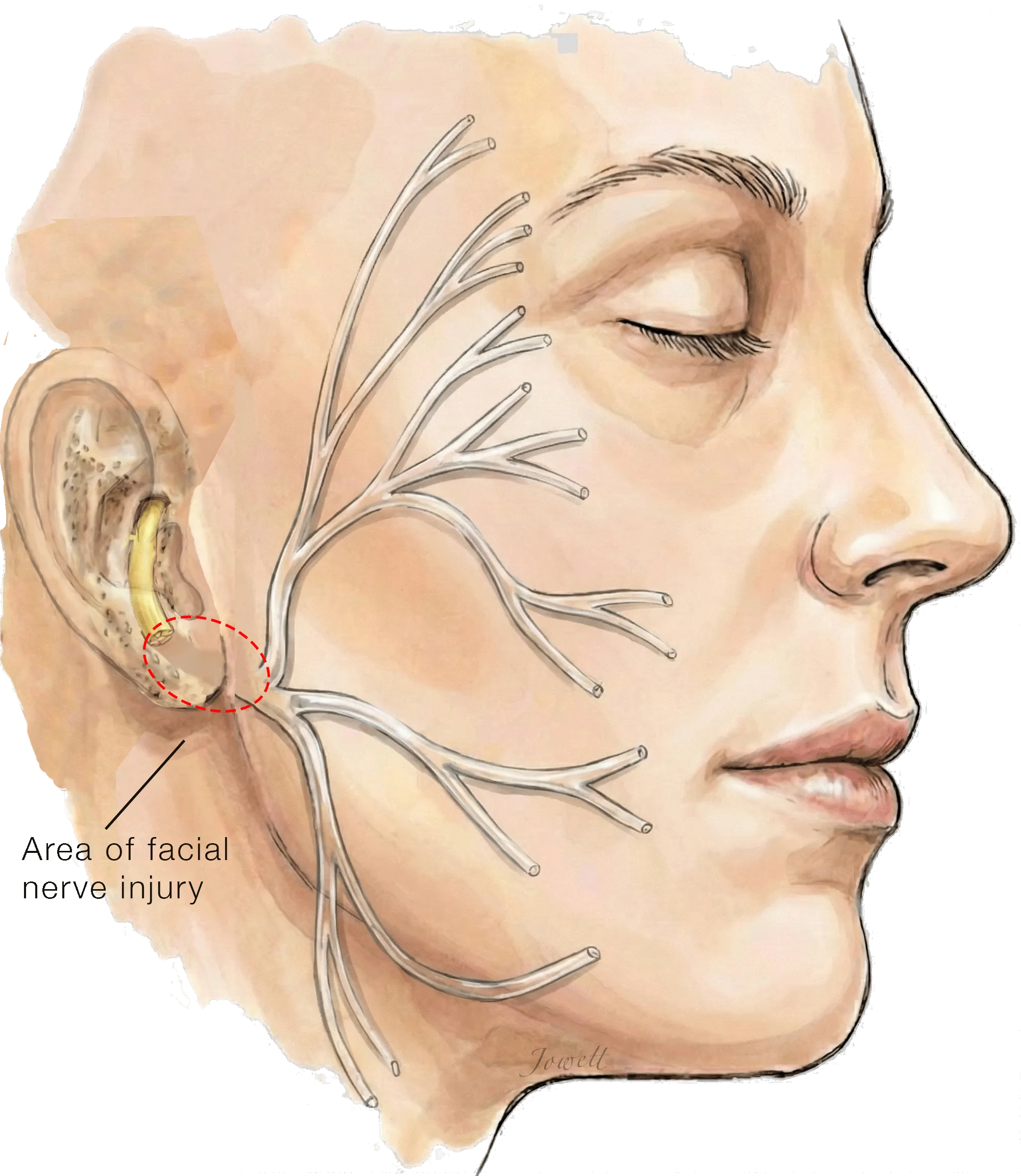
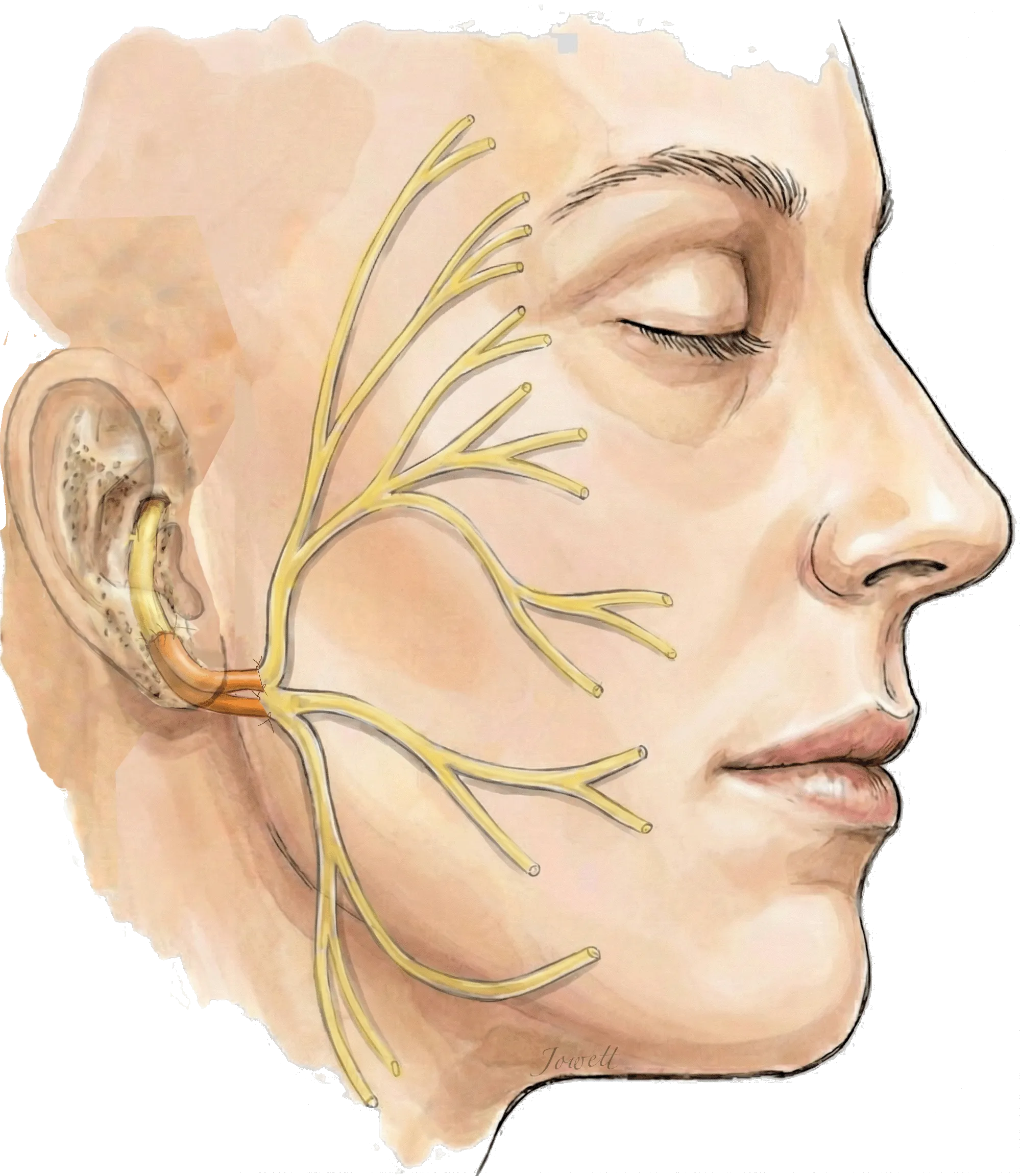
Facial Nerve Repair
Through a small incision around the ear, the main trunk of the facial nerve is exposed and repaired using a small nerve graft taken from the nerve that once supplied feeling to the earlobe.
The Outcome
One year after the repair, the patient has regained widespread facial movement. The nerve signals have successfully crossed the graft, restoring tone and voluntary movement to the face, allowing for a natural smile and improved eye closure.