Facial Synkinesis Treatment(Post-Paralysis Tightness & Twitching)
When facial nerves heal incorrectly, they can cause involuntary movements, tightness, and pain. We offer a comprehensive approach to restore facial harmony and comfort.
Synkinesis can cause spasms of the muscles of facial expression and eye closure ( hemifacial spasm and blepharospasm) on the affected side, with facial tightness, discomfort, and narrowing of the eye that can obstruct the visual field. These symptoms are assessed individually and are often treated with chemodenervation (Botox), physical therapy, or selective neurectomy.
Related case studies
Clinical Presentation of Synkinesis
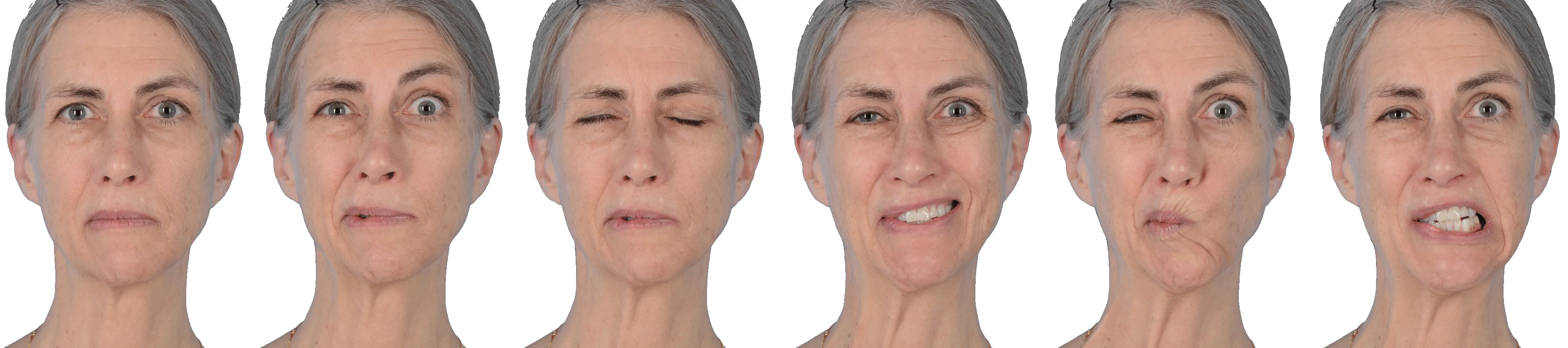
What is Synkinesis?
Synkinesis (sin-kih-NEE-sis) means "linked movement." It is unintentional movement in one part of the face when another part moves on purpose — mass motion. The usual pattern is the mouth corner rising during a blink, and the eye narrowing during a smile or while talking.
It follows a facial nerve injury — Bell's palsy, Ramsay Hunt, trauma, or tumor surgery — once regenerating axons reconnect. The pattern usually appears three to four months after the injury, when movement has begun to return. Mild injuries that only stun the nerve do not cause it.
3–4 mo
When linked movement usually appears
~17%
Of Bell's palsy recoveries develop it
1st line
Neuromuscular retraining, then Botox
What Causes Facial Synkinesis?
After the nerve is injured, the axon dies back and the cell body switches into repair. New sprouts grow at about one millimeter a day. Synkinesis is not one wiring error. It is several ways a recovering neuron can fire the wrong muscle.
Broken guide tubes
Each axon travels in an endoneurial tube — a Schwann-cell sheath that points it home. If that tube stays intact, the axon can only return to its own muscle, and synkinesis cannot occur. When the tubes are disrupted, sprouts enter vacant tubes at random. One neuron can then drive many wrong muscles. Injuries closer to the brainstem mix more, because the nerve is still one bundle.
Multiple sprouts from one neuron
A single repairing axon sends several buds. Each bud can occupy a different empty tube. The intended smile neuron may also reach the eye or the neck. Some sprouts die in scar. Others win a race into a tube that belonged to a different muscle, locking the correct axon out.
Crosstalk between neighboring axons
Myelin insulates one fiber from the next. After degeneration, remyelination is often thin or missing. A signal meant for one axon can jump to its neighbors — ephaptic transmission — so a blink can tug nearby muscles even when the axons themselves found the right tubes.
Changes in the nucleus and on the face
Injury also rearranges the facial nucleus: supporting cells can interrupt old synapses, and some motor neurons die, leaving vacant tubes for survivors to fill. On the face, vertical connections between branches can let a regenerating fiber reach both the eye and the mouth. These mechanisms sit on top of the peripheral miswiring.
Facial Synkinesis Signs and Symptoms
- Eye narrowing or closing when smiling (Ocular-oral synkinesis)
- Mouth corner pulling up when blinking (Oral-ocular synkinesis)
- Deep dimpling of the chin
- Tightness or banding in the neck (Platysma activation)
- Facial spasms or twitching
- Deep ache or pain in the cheek
- Fatigue from facial muscles constantly contracting
The "Frozen" Smile
Patients often feel their smile is weak or paralyzed. In reality, synkinesis often causes the opposing muscles (those that pull the smile down) to fire at the same time as the smile muscles.
It's like driving with the parking brake on. Treatment focuses on releasing that brake.
Video Analysis: Recognizing Synkinesis
Facial Synkinesis Treatment Options
1. Neuromuscular Retraining
First-line care. Specialized facial therapy teaches the brain to isolate movement. Electrical stimulators are not recommended — they can reinforce the linked pattern.
2. Targeted Chemodenervation (Botox)
Second-line, usually paired with retraining. Strategic Botox weakens miswired muscles so the smile can move more freely. The effect lasts a few months.
3. Selective Neurectomy
Reserved for people who still feel trapped after retraining and Botox. Dr. Jowett divides the branches driving unwanted movement while preserving the ones that matter.
4. Selective Myectomy
Removes a strip of a persistently overactive muscle — platysma banding, a chin that dimples, or a depressor that holds the smile down. Often paired with neurectomy when Botox helps but the effect will not last.
5. Nerve and Muscle Transfers
For severe synkinesis whose native smile stays weak even after the parking brake is released. A new muscle, powered by a healthy nerve, bypasses the miswired system. See a gracilis transfer case study.
What the Evidence Shows
Synkinesis is a wiring problem, not a new injury. Care starts with retraining and targeted chemodenervation; surgery is reserved for people who still feel trapped.
- Synkinesis is mass motion. It requires disruption of the axon guide tubes. Mild injuries that only stun the nerve do not produce it.
- The main mechanisms are axons entering the wrong tubes, one neuron sprouting into many muscles, electrical crosstalk from poor remyelination, and rearrangements in the facial nucleus and facial-branch connections.
- Linked movement usually appears three to four months after the nerve starts to recover.
- Neuromuscular retraining is first-line. Home electrical stimulators are not recommended and can reinforce the linked pattern.
- Botulinum toxin weakens the miswired muscles so the smile can move more freely. The effect lasts a few months and pairs best with therapy.
- Selective neurectomy is for people who still feel tight after retraining and Botox. The goal is to quiet the worst branches while keeping the ones that matter.
- Selective myectomy removes a strip of a persistently overactive muscle when Botox helps but will not last.
- Nerve and muscle transfers are for severe synkinesis whose native smile stays weak after the antagonists are released.
- Guidelines recommend standardized grading — a validated clinician instrument such as the Sunnybrook system plus a synkinesis-specific patient-reported measure — to map the pattern and track response. The House-Brackmann scale is not adequate for grading synkinesis.
- Starting retraining early, once movement returns but before synkinesis is entrenched, reduces later severity; it does not reliably prevent synkinesis from developing.
- Combining selective neurectomy or platysma myectomy with myectomy can improve smile excursion and reduce ongoing botulinum toxin needs, though revision surgery is common after extensive reconstruction.
Why Choose Revitalis for Facial Synkinesis?
Managing synkinesis requires a deep understanding of facial anatomy and nerve physiology. Dr. Nate Jowett is one of the few surgeons globally who performs Selective Neurectomy, a sophisticated procedure that can offer lasting relief when Botox and therapy are not enough.
We don't just treat the paralysis; we treat the entire facial system to restore comfort, symmetry, and a natural smile.
Common questions
Facial synkinesis FAQs
Why does my eye close when I smile or eat?
Regrowing facial nerve fibers can connect to more than their intended muscles. When smile signals also activate eyelid muscles, the result is ocular-oral synkinesis.
Is facial exercise always helpful?
Technique matters. Specialist neuromuscular retraining emphasizes small, controlled movements and relaxation. Forceful strengthening, electrical stimulation, or high-repetition routines may not be appropriate for synkinesis.
Does Botox permanently fix synkinesis?
No. Botulinum toxin usually lasts about three to four months and is adjusted over repeated visits. It can provide meaningful functional and comfort benefits and may complement retraining; surgery is considered for selected durable goals.
When does synkinesis start after Bell's palsy?
Usually around three to four months, as the nerve finishes reconnecting. Early return of movement is good news; linked eye-closure or neck banding that appears later is synkinesis, not a new injury.
Should I use a facial electrical stimulator at home?
No. Electrical stimulation has not been shown to help and may reinforce the linked pattern. Work with a therapist trained in facial neuromuscular retraining instead.
Is Botox a cure?
Botox eases tightness and linked movement, but the effect lasts a few months. Most people pair it with retraining. Selective neurectomy is for those who still feel trapped after conservative care.
Is hemifacial spasm the same as synkinesis?
They are different conditions that can look similar. Synkinesis appears after a facial nerve injury and is triggered by deliberate movement, so the eye narrows when you smile or speak. Hemifacial spasm fires on its own, usually begins around one eye, and often continues during sleep. Telling them apart guides treatment, and an EMG lateral-spread response can help when the examination is not decisive.
Can synkinesis affect my vision?
It can affect how well you see without damaging the eye itself. Involuntary narrowing of the eye during smiling, talking, or eating can obstruct part of the visual field, and platysma and periocular tightness can make the problem worse through the day. If the eye cannot close fully and there is pain, redness, or a change in vision, that needs prompt ophthalmologic assessment because the cornea is at risk.
Answers are general and individualized at consultation.
Medical References & Evidence-Based Guidelines
- Mechanisms of Synkinesis. Crumley RL. Laryngoscope. 1979;89(11):1847-1854. PMID: 502707.
- Effect of Weakening of Ipsilateral Depressor Anguli Oris on Smile Symmetry in Postparalysis Facial Palsy. Jowett N, Malka R, Hadlock TA. JAMA Facial Plast Surg. 2017 Jan 01; 19(1):29-33. PMID: 27658020.
- Weighting of Facial Grading Variables to Disfigurement in Facial Palsy. Banks CA, Jowett N, Hadlock CR, Hadlock TA. JAMA Facial Plast Surg. 2016 Jul 01; 18(4):292-8. PMID: 27124886.
- A General Approach to Facial Palsy. Jowett N. A General Approach to Facial Palsy. Otolaryngol Clin North Am. 2018 Dec; 51(6):1019-1031. PMID: 30119926.
- An Evidence-Based Approach to Facial Reanimation. Jowett N, Hadlock TA. Facial Plast Surg Clin North Am. 2015 Aug; 23(3):313-34. PMID: 26208770.
- Contemporary Management of Bell Palsy. Jowett N, Hadlock TA. Facial Plast Surg. 2015 Apr; 31(2):93-102. PMID: 25958893.
- Pathogenesis, Diagnosis and Therapy of Facial Synkinesis: A Systematic Review and Clinical Practice Recommendations. Guntinas-Lichius O, Prengel J, Cohen O, et al. Front Neurol. 2022;13:1019554. PMID: 36438936.
- Facial synkinesis outcome measures: A systematic review of the available grading systems and a Delphi study to identify the steps towards a consensus. Berner JE, Kamalathevan P, Kyriazidis I, et al. J Plast Reconstr Aesthet Surg. 2019;72(6):946-963. PMID: 30928304.
- Neuromuscular retraining therapy for early stage severe Bell's palsy patients minimizes facial synkinesis. Kim DR, Kim JH, Jung SH, et al. Clin Rehabil. 2023;37(11):1510-1520. PMID: 36972474.
- Selective Myectomies Alone versus Selective Myectomies Combined with Neurectomies in Postparetic Synkinesis: Comparing Outcomes. Sanchez CV, Gault NA, Gopalan TA, et al. Plast Reconstr Surg. 2024;154(4):859-869. PMID: 38315693.