Facial nerve care · Scottsdale, Arizona
Facial Palsy & Facial Paralysis Treatment
Facial palsy and facial paralysis are overlapping patient terms for weakness or loss of facial movement. Severity ranges from subtle asymmetry to complete paralysis. The cause, timing, nerve continuity, eye safety, and remaining muscle function determine what evaluation and treatment make sense.
Start with safety
New facial weakness needs timely evaluation
A new facial droop is not automatically Bell’s palsy. A clinician evaluates how quickly it began, which facial zones are involved, associated symptoms, eye closure, and whether imaging, laboratory testing, or another specialist is needed.
When Bell’s palsy is the diagnosis, early treatment and eye protection matter. When weakness is progressive, recurrent, uneven across facial zones, or accompanied by other neurologic findings, the diagnostic path is different.
Function, not just appearance
What facial palsy can affect
The facial nerve coordinates expression and supports several everyday functions. Evaluation should account for the whole face and the patient’s priorities.
A decision pathway
What determines facial palsy treatment
There is no single operation or therapy for every facial palsy. These findings shape whether the plan emphasizes observation, eye care, rehabilitation, nerve reconstruction, or muscle transfer.
- 01
Onset and trajectory
Sudden, progressive, recurrent, or present from birth
- 02
Cause and injury location
Inflammation, tumor, trauma, prior surgery, or a central neurologic cause
- 03
Nerve continuity
Whether the facial nerve is intact, compressed, stretched, or divided
- 04
Movement and muscle viability
Which facial zones move and whether the native muscles can still respond
- 05
Eye safety
Blink strength, eyelid closure, corneal sensation, dryness, and exposure
- 06
Prior treatment and goals
Recovery to date, therapy, injections, operations, and the functions that matter most
Treatment families
Treatment may combine several approaches over time. The links below explain the major pathways and when they may be considered.
Protect the eye
Lubrication, moisture protection, eyelid support, and corneal-sensation care are prioritized when blink or sensation is impaired.
Explore this pathway →Retrain coordinated movement
Facial neuromuscular retraining works on control, symmetry, and strategies for synkinesis.
Explore this pathway →Reduce unwanted muscle activity
Targeted chemodenervation can reduce tightness and linked movements as part of a broader plan.
Explore this pathway →Repair or reroute nerve input
Direct repair, grafting, or nerve transfer may be considered while facial muscles can still receive a useful signal.
Explore this pathway →Reanimate a longer-standing smile
Smile reanimation may use regional or free functional muscle transfer when native smile muscles are no longer viable.
Explore this pathway →Rebalance persistent synkinesis
Selective neurectomy may be considered for selected patients after rehabilitation and injection-based treatment.
Explore this pathway →Cause directory
Conditions and causes we evaluate
These pages keep distinct diagnoses separate while connecting them to the same facial-nerve evaluation and reconstruction framework.
Bell’s Palsy (Acute & Chronic)
Sudden one-sided weakness that peaks within 72 hours—and the incomplete recovery that can follow.
Recovery patternFacial Synkinesis
Tightness, twitching, and linked movements that can appear as a facial nerve recovers.
Tumor-relatedAcoustic Neuroma
Facial weakness or paralysis associated with vestibular schwannoma and its treatment.
Sudden or infectiousRamsay Hunt Syndrome
Facial nerve shingles, often accompanied by ear pain, blisters, hearing change, or vertigo.
Sudden or infectiousLyme-Associated Facial Palsy
Facial weakness associated with Lyme disease, including patterns that can affect both sides.
Tumor-relatedParotid Tumor & Cancer Reconstruction
Facial nerve planning and reconstruction when parotid disease involves the nerve.
Tumor-relatedSkin Cancer with Perineural Spread
Cutaneous cancer tracking along a facial nerve branch, sometimes presenting as progressive weakness.
CongenitalMoebius Syndrome
Congenital facial weakness that may affect both sides and may be evaluated for smile reconstruction.
Injury or surgery-relatedFacial Asymmetry After Facelift
Assessment of an uneven smile or facial weakness after facelift surgery.
Injury or surgery-relatedTraumatic Facial Nerve Injury
Facial nerve injury after fracture, laceration, penetrating trauma, or another operation.
Tumor-relatedFacial Nerve Schwannoma
A tumor arising from the facial nerve, evaluated according to location, growth, hearing, and facial function.
CongenitalCongenital Unilateral Lower Lip Palsy
Asymmetric crying facies caused by lower-lip muscle or nerve differences present from birth.
Spasm and involuntary movementHemifacial Spasm
Involuntary twitching that starts around one eye and can spread down the same side of the face.
Spasm and involuntary movementBlepharospasm & Meige Syndrome
Forced, involuntary closure of both eyelids, sometimes with jaw or mouth movement.
Neurologic and otherOther Causes of Facial Weakness
Central neurologic, autoimmune, metabolic, and other patterns that do not fit typical Bell’s palsy.
Facial nerve surgeon
Nate Jowett, MD, PhD, FRCSC
Dr. Jowett’s work spans facial nerve diagnosis, nerve repair, smile reanimation, reconstructive microsurgery, and research on facial function.
Facial rehabilitation
Sheri Donaldson, PT, DPT, NCS
Facial neuromuscular retraining supports movement control and coordination, including care for post-paralytic synkinesis.
Common questions
Facial palsy questions
Are facial palsy and facial paralysis the same?
They are overlapping terms, but they do not always describe the same severity. Facial palsy may include partial weakness; facial paralysis often implies little or no movement. The clinical diagnosis should identify the pattern and cause rather than rely on the search term alone.
When should I see a facial nerve specialist?
Prompt evaluation is important for a threatened eye, progressive or recurrent weakness, an atypical pattern, or concern that a nerve was injured or divided. Specialist assessment is also useful when recovery has plateaued, synkinesis develops, or function remains limited.
Does every patient need surgery?
No. Observation, eye care, medication for selected acute diagnoses, rehabilitation, and chemodenervation are important parts of facial nerve care. Surgery is selected according to timing, cause, nerve continuity, muscle viability, symptoms, and goals.
Can patients travel to Revitalis?
Revitalis is in Scottsdale and evaluates inquiries from patients who may travel from elsewhere in the United States or internationally. Travel timing depends on the evaluation and treatment plan; discuss logistics with the practice before booking travel.
Answers are general and individualized at consultation.
Medical References & Evidence-Based Guidelines
- A General Approach to Facial Palsy. Jowett N. A General Approach to Facial Palsy. Otolaryngol Clin North Am. 2018 Dec; 51(6):1019-1031. PMID: 30119926.
- Facelift Surgery and Nerve Injury: A Systematic Review and Meta-Analysis. Gandra G, Silva BS, Horta R. Aesthetic Plast Surg. 2025;49:5696-5711. PMID: 40456989.
- Facial Nerve Danger Zones. Roostaeian J, Rohrich RJ, Stuzin JM. Plast Reconstr Surg. 2020;145(1):99e-102e. PMID: 31881610.
- Anatomical Considerations to Prevent Facial Nerve Injury. Roostaeian J, Rohrich RJ, Stuzin JM. Plast Reconstr Surg. 2015;135(5):1318-1327. PMID: 25919245.
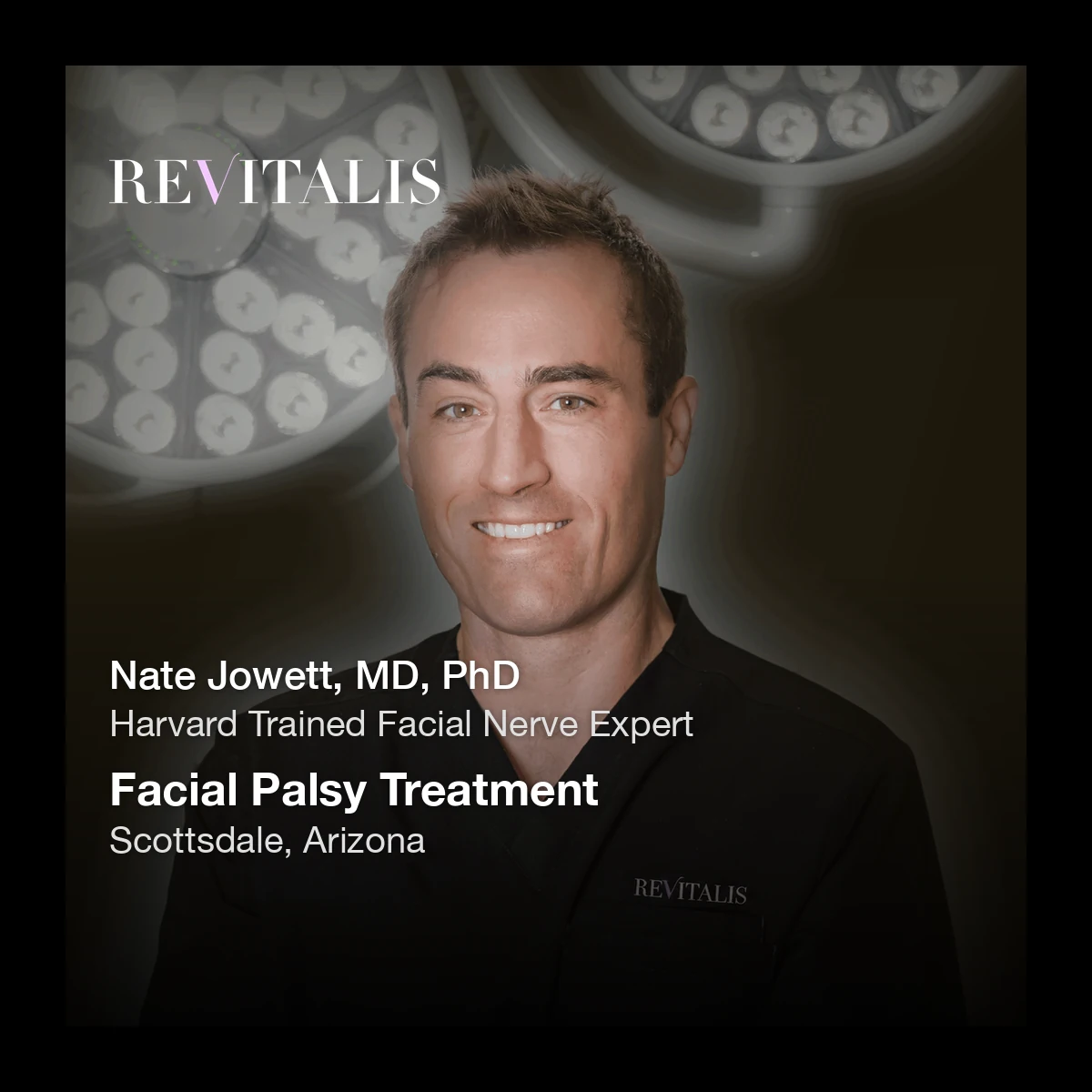
Facial Palsy Treatment
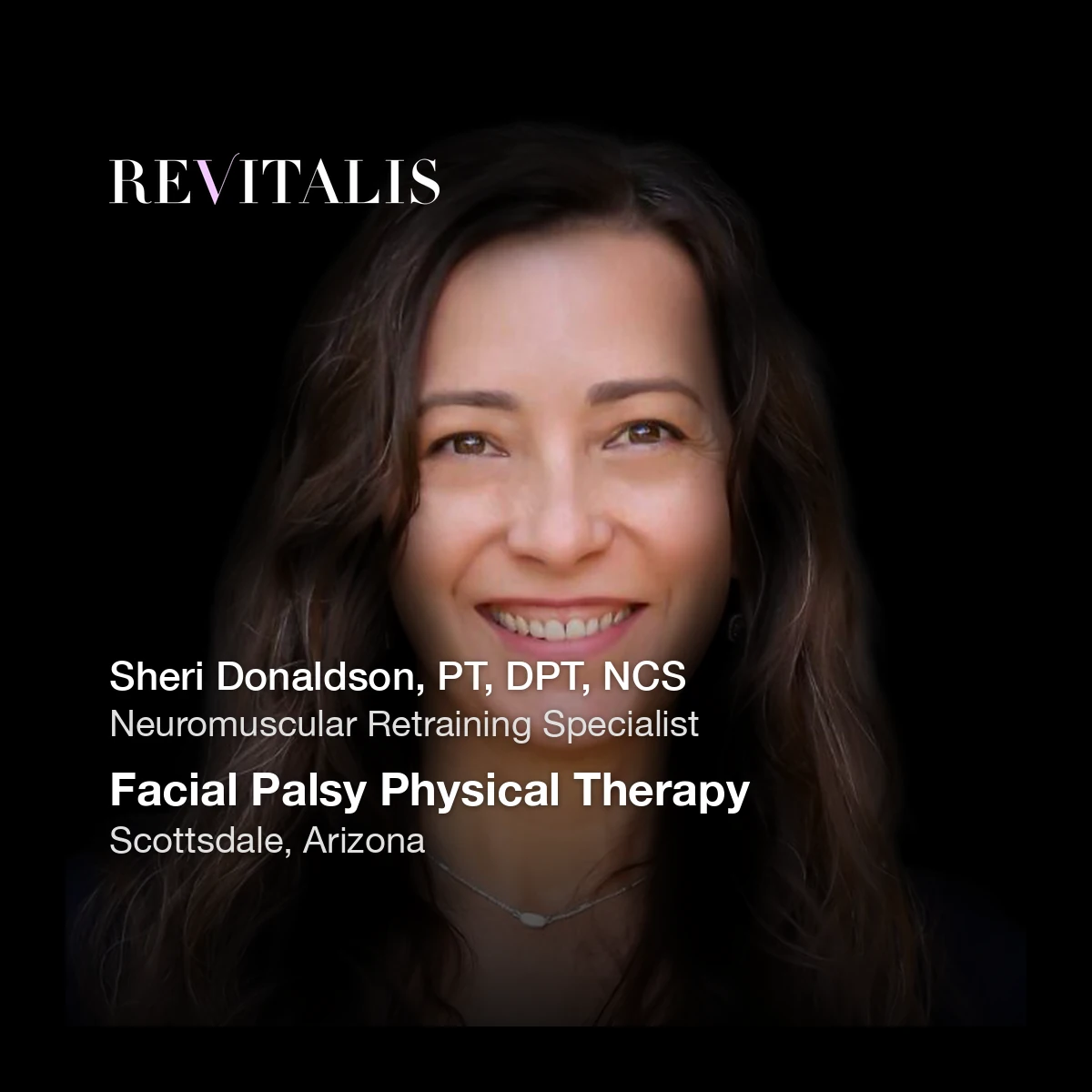
Facial Palsy Physical Therapy

Botox for Synkinesis & Asymmetry
A clear next step
Request a focused facial nerve evaluation
Share the cause or timeline if known, what movement has returned, eye symptoms, and prior treatment. The existing Inquire Now pathway sends the request through Revitalis’s established inquiry workflow.