Eyelid Reanimation Surgery(Protecting Vision & Restoring Comfort)
Procedures designed to improve eyelid closure and lower-lid position, support the cornea, and reduce symptoms of ocular exposure after facial paralysis.
Related case studies
Why is Eyelid Surgery Necessary?
The facial nerve controls the orbicularis oculi muscle, which is responsible for closing the eye and generating the blink reflex. When the facial nerve is paralyzed, patients experience lagophthalmos—the inability to fully close the eye.
Without an effective blink, the eye may not spread tears or protect itself from dust and wind. Exposure can cause dryness, burning, reflex tearing, epithelial breakdown, ulceration, infection, scarring, and—in severe untreated cases—vision loss. The actual risk depends on corneal sensation, tear production, degree of closure, and other ocular disease.
Eyelid reanimation surgery is often the most urgent priority in facial paralysis treatment. It typically involves two components:
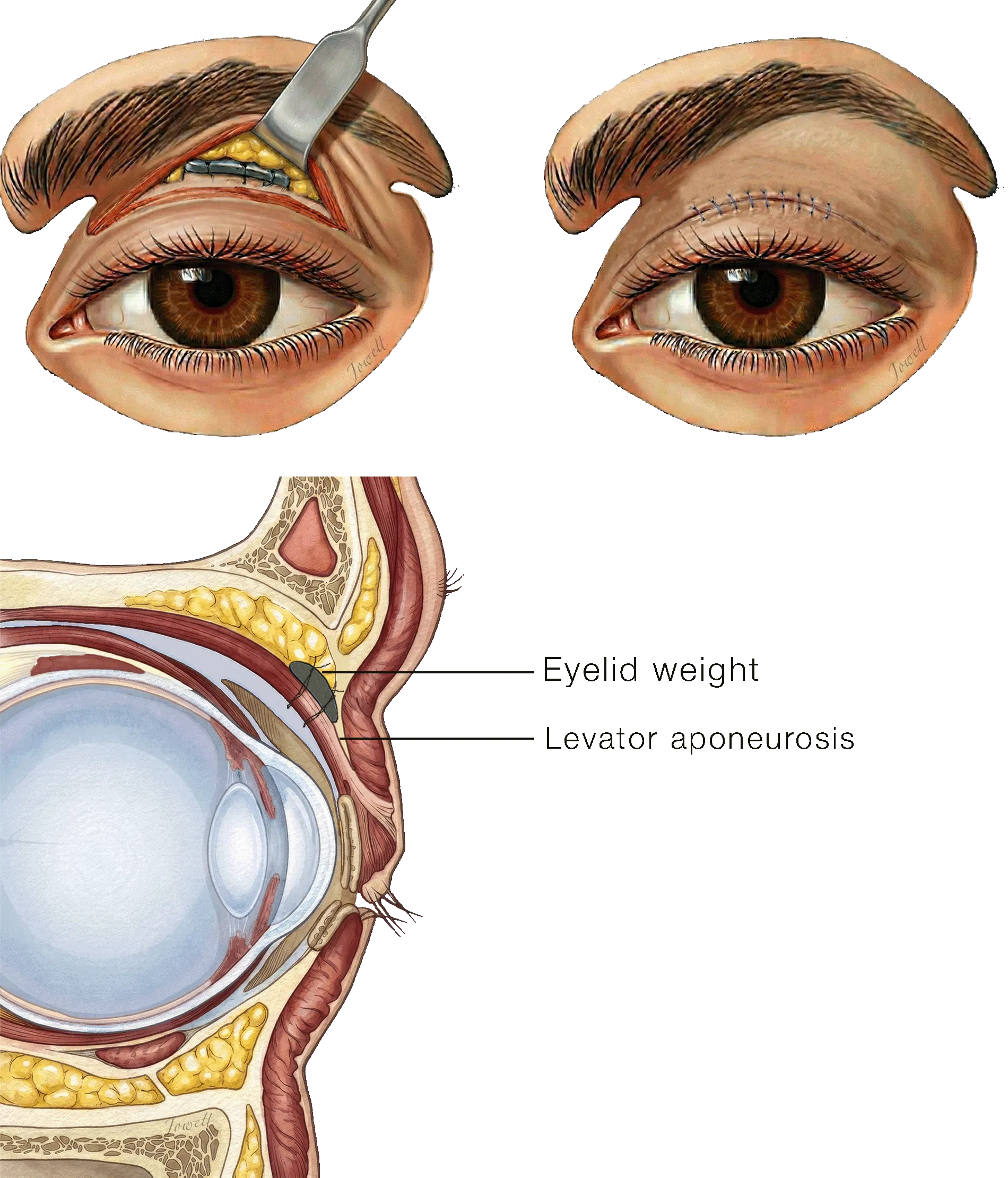
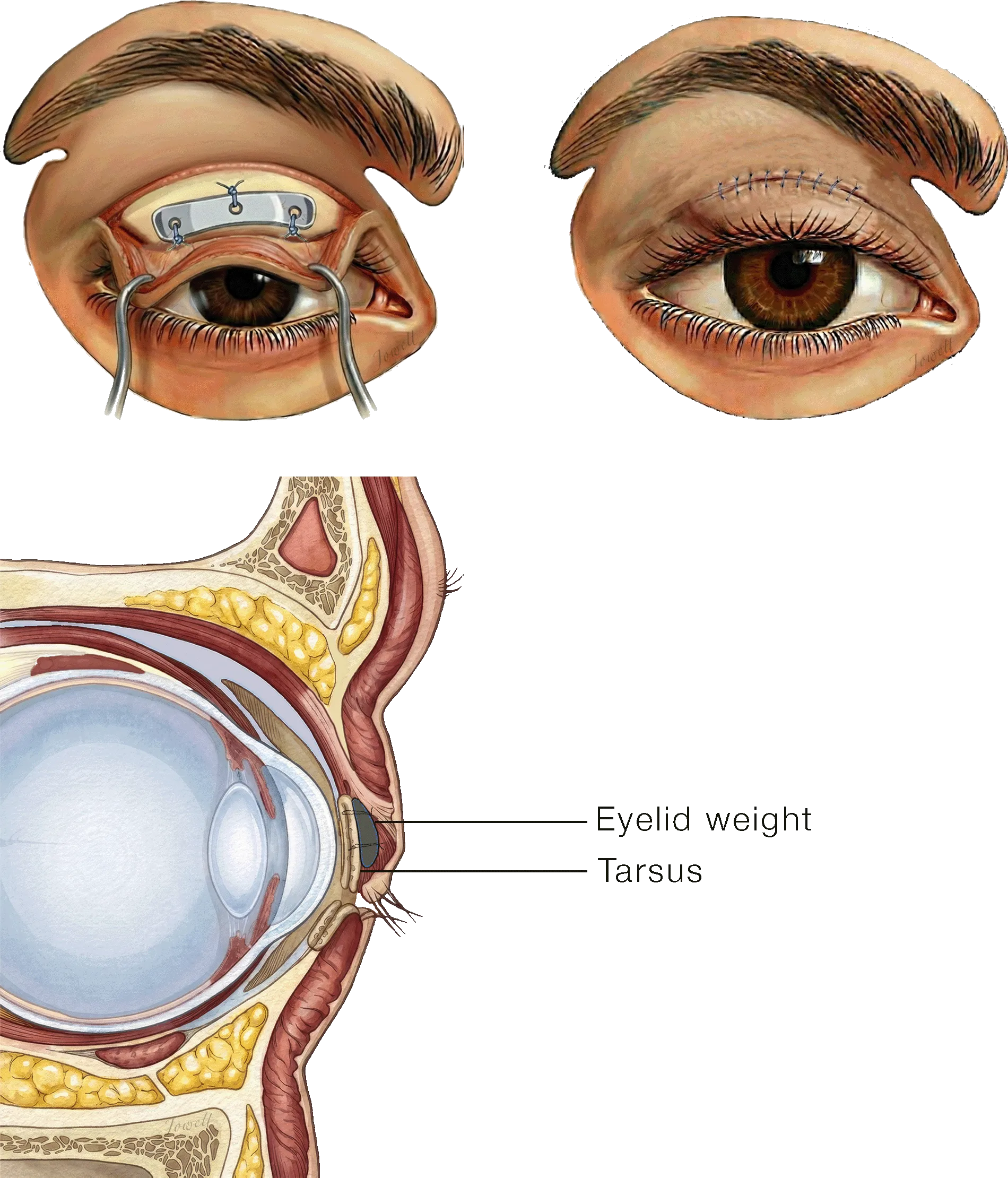
- Upper Eyelid Weight Placement: A thin, contoured piece of platinum or gold is hidden beneath the skin of the upper eyelid, using gravity to gently pull the lid down when the patient relaxes their muscles to blink.
- Lower Eyelid Sling/Suspension: The lower eyelid often sags downward (ectropion) due to loss of muscle tone. A supportive sling (often using a piece of tendon or specialized suture) is placed to hike the lower lid back up tightly against the globe of the eye, capturing tears and preventing them from spilling over the cheek.
Conditions Requiring Eyelid Protection
Any condition that causes acute or chronic weakness of the upper facial nerve branches puts the eye at risk and may necessitate these procedures.
What Eyelid Surgery for Facial Paralysis Can Restore
- Vision Preservation: Improved closure reduces exposure and supports the ocular surface alongside lubrication and ophthalmic care.
- Ocular Comfort: Improved closure may reduce burning and scratching from exposure, although lubrication and ophthalmic care may still be needed.
- Reduced Maintenance: Frees patients from having to constantly tape their eye shut at night or apply messy ointments every hour.
- Improved Appearance: Corrects the staring, wide-eyed look and fixes the sagging lower lid, creating a more symmetrical resting appearance.
How Eyelid Surgery for Facial Paralysis Is Performed
Eyelid surgery for paralysis is often performed with local anesthesia and light sedation, although the anesthetic plan varies. Preoperative sizing and intraoperative assessment help balance closure against heaviness, contour, and the ability to open the eye.
Lower Eyelid Sling Innovation: Dr. Jowett has published extensively on techniques to manage the lower eyelid. While older methods simply tightened the skin, Dr. Jowett utilizes deep suspension techniques, often using a strip of fascia (tendon) from the leg, to build an internal "hammock." This securely anchors the lower lid to the orbital bone, providing long-lasting support that withstands the downward pull of gravity and paralyzed tissues.
What the Evidence Shows
A paralyzed eyelid is an eye-safety problem first and a symmetry problem second.
- Upper-lid weights or springs restore closure in most patients. Springs blink more, but they need more revisions.
- A drooping lower lid often needs its own support. A weight alone will not fix that.
- Absent corneal sensation, a poor Bell's phenomenon, or older age should move surgery earlier, not later.
- Lubrication is established first-line care and may be enough for mild, short-lived cases: artificial tears or gels during the day, thicker ointment with taping or a moisture chamber at night, and scleral contact lenses for resistant surface disease.
- Surgery is generally considered when incomplete closure persists beyond about six weeks, when the cornea over the pupil is affected, or when facial nerve recovery is expected to be poor.
- Material matters for upper-lid weights. Platinum is thinner, less visible, and less likely to cause allergy, while gold has been associated with higher rates of prominence, migration, and repeat surgery. Extrusion is more likely in eyes that have been irradiated.
- Tarsorrhaphy - partially sewing the lids together - is highly protective but narrows the eye opening, so it is generally reserved for selected or severe situations rather than routine use.
- Same-day eye care is warranted for sudden or worsening eye pain, marked redness, a white or hazy spot on the cornea, new blurred vision, or a foreign-body sensation that lubrication does not relieve. These can signal corneal ulceration, which threatens vision.
Why Choose Revitalis for Eyelid Surgery?
Because preserving your vision is paramount, Dr. Nate Jowett prioritizes eye protection above all other reconstructive goals.
A painful red eye, light sensitivity, or reduced vision with lagophthalmos requires urgent ophthalmic assessment. At Revitalis, Dr. Jowett tailors implant weight, contour, and placement to improve passive closure while limiting heaviness and visibility. An implant may remain palpable or visible and can require exchange or removal; it does not reproduce every feature of a native blink.
Common questions
Questions Patients Ask
Why is platinum used for some eyelid implants?
Platinum is denser than gold, so a thinner profile can provide a similar gravitational effect. Implant choice and placement depend on eyelid anatomy, prior surgery, allergy history, and surgeon preference.
Will an eyelid weight recreate a normal blink?
It improves passive closure using gravity but does not reproduce every rapid, reflex, or spontaneous feature of a native blink. Dynamic procedures are evolving and may be appropriate in selected settings.
Can the implant be removed if facial movement returns?
Yes. Upper-lid weights are designed to be reversible. Removal or exchange may be considered if closure recovers, the required weight changes, or an implant complication occurs.
How long should I try drops and ointment before considering surgery?
Lubrication is appropriate first-line care and may be enough for mild, short-lived cases with good expected recovery. Surgery is generally considered when incomplete closure persists beyond about six weeks, when the cornea over the pupil is affected, or when facial nerve recovery is expected to be poor. The timing depends on the cause and prognosis rather than a fixed calendar.
What does good eye protection look like at night?
Typically a thicker ointment plus taping or a moisture chamber overnight, with artificial tears or gels during the day. Scleral contact lenses are used for resistant surface disease. These measures protect the eye while recovery is awaited or surgery is planned, and are usually continued during healing after surgery.
Do I need lower-eyelid surgery as well as a weight?
Often yes. An upper-lid weight helps the lid come down, but it does not correct a lower lid that sags or turns outward. Lower-lid tightening or suspension addresses that position and helps tears distribute across the eye, so the two procedures are frequently combined for full protection.
When should I get urgent eye care?
Seek same-day eye care for sudden or worsening eye pain, marked redness, a white or hazy spot on the cornea, new or worsening blurred vision, or a persistent gritty sensation that lubrication does not relieve. These can signal corneal ulceration or breakdown, which threatens vision.
Answers are general and individualized at consultation.
Medical References & Evidence-Based Guidelines
- Lower Eyelid Management in Facial Paralysis. Jowett N. Facial Plast Surg. 2023 Feb; 39(1):47-52. PMID: 36564035.
- Lower Eyelid Sling for Primary and Revision Correction of Paralytic Lagophthalmos. Bartholomew RA, Ein L, Jowett N. Facial Plast Surg Aesthet Med. 2023 May-Jun; 25(3):226-231. PMID: 35969387.
- Experience With the Gold Weight and Palpebral Spring in the Management of Paralytic Lagophthalmos. Terzis JK, Kyere SA. Plast Reconstr Surg. 2008;121(3):806-815. PMID: 18317130.
- Clinical features, evaluation, and management of ophthalmic complications of facial paralysis: A review. Moncaliano MC, Ding P, Goshe JM, et al. J Plast Reconstr Aesthet Surg. 2023;87:361-368. PMID: 37931512.
- Upper Eyelid Static Surgical Approaches for the Treatment of Facial Palsy-Induced Lagophthalmos: A Systematic Review. Ottonelli G, Celada Ballanti J, Gaeta A, et al. J Clin Med. 2025;14(13). PMID: 40649065.
- Late outcomes of gold weights and platinum chains for upper eyelid loading. Siah WF, Nagendran S, Tan P, et al. Br J Ophthalmol. 2018;102(2):164-168. PMID: 28689170.
- Long-Term Outcomes of Upper Eyelid Loading with Platinum Segment Chains for Lagophthalmos: An Adjustable Approach. Ben Artsi E, Ullrich K, Brusasco L, et al. Am J Ophthalmol. 2020;214:188-195. PMID: 31765627.
- Lagophthalmos: An etiological lookout to frame the decision for management. Rita MRH, Deepa M, Gitanjali VC, et al. Indian J Ophthalmol. 2022;70(8):3077-3082. PMID: 35918976.